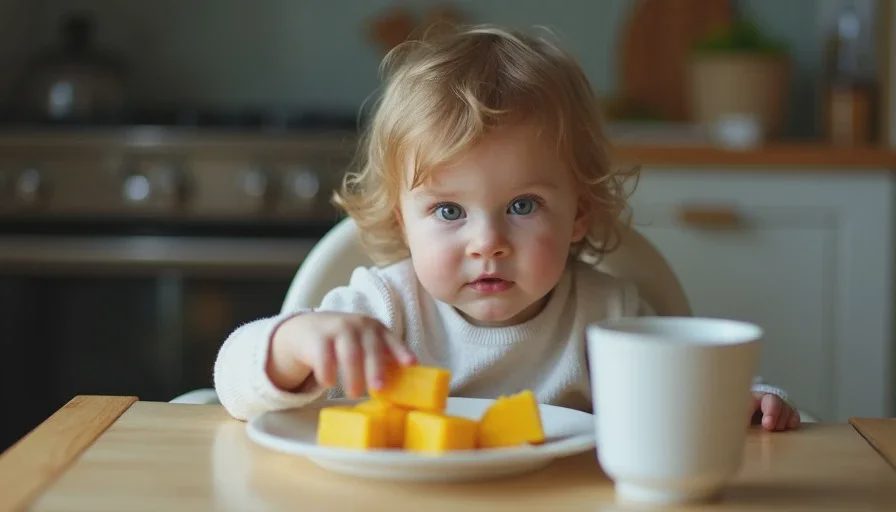
If your toddler eats like a tiny grazing animal from breakfast to bedtime and then stares at dinner like it's a stranger, you're in the snack trap. It's the most common feeding pattern I saw in eight years of teaching, and it's why most toddler snack ideas fail — not because the snacks themselves are wrong, but because the structure around them is missing. Mae fell into the trap around eighteen months, when a cup of crackers at ten, a banana at eleven-thirty, and a handful of goldfish at four-thirty quietly added up to a child who pushed her dinner plate away. I want to show you how the trap works and how we climbed out.
The Grazing Cycle, Explained
Here's the part that made me feel better when I first spotted it in my classroom: grazing isn't a toddler being difficult. It's a system problem. A two-year-old genuinely does need to eat more often than an adult — but "more often" can drift into "constantly available," and once food is always on offer, dinner has to compete with every snack that came before it. The cycle feeds itself. The less she eats at dinner, the hungrier she is by bedtime, the earlier and bigger the breakfast requests, the less room there is for the next dinner. Breaking it isn't about willpower on anyone's part. It's about putting a schedule around food so hunger and meals line back up.
Why toddlers graze in the first place
Tiny stomachs. Toddlers genuinely can't hold much at once, so frequent eating is real and necessary.
Snack dependency. When a child learns food arrives on demand, the dinner bell loses its power. Why rally for a meal that's "always available anyway"?
Boredom and attention. Sometimes the snack request is really a request for you. A handful of crackers is easier to give than ten minutes of undivided attention, and they learn that trade fast.
How a Classroom Runs Snack (and What Home Can Borrow)
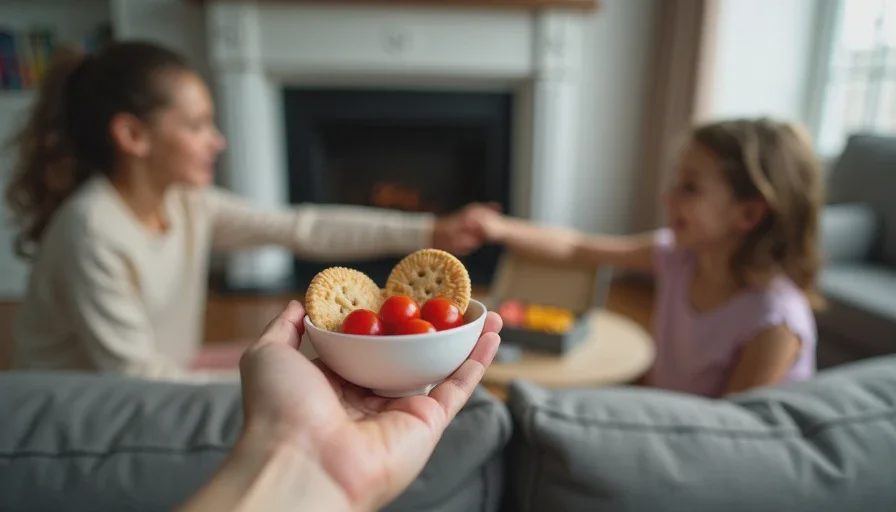
In my classroom, snack was a scheduled event: mid-morning, at the table, everyone eating the same small thing together, then done until lunch. Kids ate better at lunch because they were genuinely hungry at lunch. The schedule did the work so no adult had to play the bad guy. At home, the same structure is possible — it just requires deciding the times in advance and holding them gently. None of the toddler snack ideas here are exotic, and that's deliberate. Familiar foods on a predictable schedule are the entire point.
The schedule I use at home
Time | What happens | Notes |
|---|---|---|
7:30 a.m. | Breakfast | Whole meal, at the table |
10:00 a.m. | Morning snack | Small, one or two foods |
12:00 p.m. | Lunch | Whole meal, at the table |
3:00 p.m. | Afternoon snack | Small, one or two foods |
5:30 p.m. | Dinner | Whole meal, with the family |
After 6:15 | Kitchen is closed | No food until breakfast |
Breaking the Cycle Without Battles
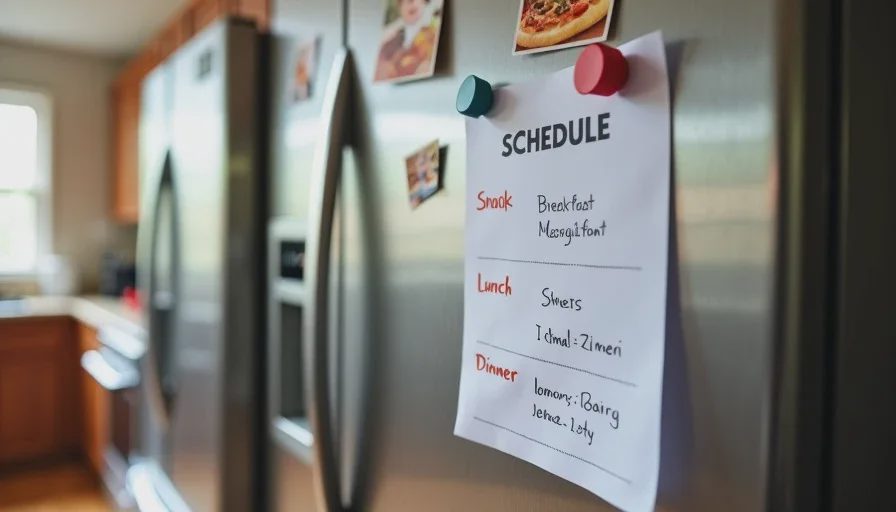
The shift isn't about saying no all day. It's about making snacks predictable so nobody has to negotiate for them. In our house, snacks happen at the same times every day, they happen at the table, and they're small enough that hunger survives until dinner. The toddler snack ideas themselves are deliberately simple — boring is a feature when you're building a routine. When Mae asks for food off-schedule, I say "snack time is at three" and I hold the line, calmly, every single time. The first week was whiny. The second week, she stopped asking, because she learned the snack would come anyway.
What to do when dinner gets refused anyway
There will be nights when the plate stays full, and I want you to have a plan for that too. We clear the table without comment. No "you barely touched your food," no alternate meal appearing minutes later. She's never gone to bed starving — kids are stubborn, but they're also hungry, and breakfast is always waiting. What I've learned as both a teacher and a mom is that a refusal here and there means nothing about your cooking or your parenting. It means a toddler made a choice about one meal.
What a Better Snack Looks Like
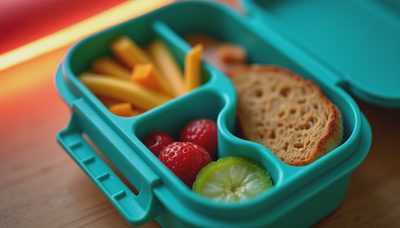
The goal isn't more snacks or fewer — it's snacks that actually hold a toddler until the next meal. That's where the useful toddler snack ideas come in. A snack that's mostly carbs — crackers, fruit, juice — digests fast, which means the cycle starts over in forty minutes. A snack that pairs a protein or a fat with a produce item lasts longer and does more work. A few of my go-tos for Mae:
Apple slices with peanut butter
Cucumber rounds with hummus
Cheese cubes and grapes
A hard-boiled egg with a few berries
Plain yogurt with a sprinkle of cereal
These are also the snacks that work for a picky eater toddler, because they're one or two familiar foods with no assembly required. A picky eater toddler eats what she recognizes, and a schedule she can predict makes her far more willing to try what's on the plate at dinner.
The Short Version
The snack trap closes slowly, and it opens the same way. Give snacks a schedule, keep them small, put them at the table, and let dinner stand on its own. If your toddler eats more at breakfast and lunch for a few days while she adjusts, that's normal — the system rebalances. It's a season, not a race, and this season is mostly about structure, which is the one thing parents actually control.
Travellers Write
No letters yet — be the first traveller to write.