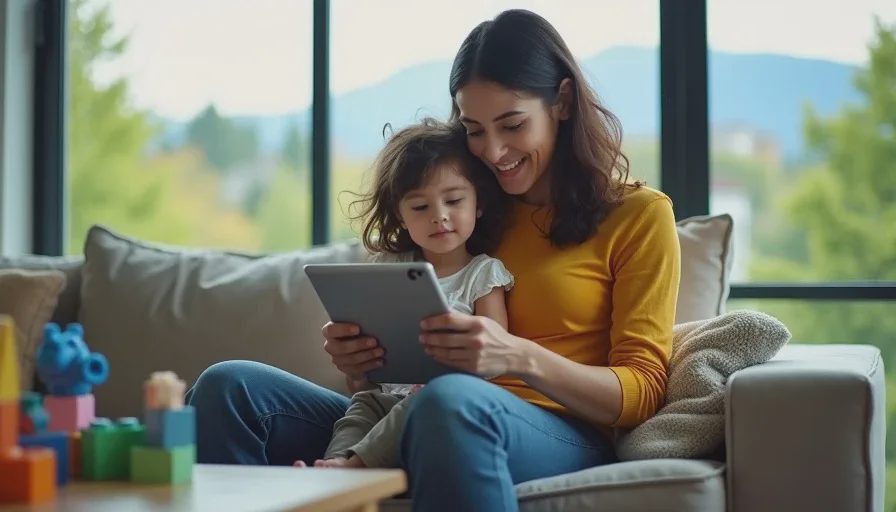
When Mae was about 18 months old, I caught myself hiding my phone behind my back when she walked into the room. Not because I had a grand parenting philosophy about screen time — I was reading a text from Mike about picking up milk. But it struck me that if I felt the need to hide my own screen, maybe I needed to think more intentionally about what toddler activities at home looked like in our house, screens and all. I'm going to share exactly what screen time looks like for Mae at 2, what Ollie gets at 6, and why I've landed where I have — without the shame spiral.
What the Panic Says vs. What I've Actually Observed
The loudest voices online treat any screen time before age 5 like developmental negligence. I understand the fear — I taught preschool for 8 years, and I've seen kids who clearly spent too many hours zoned out in front of tablets. But I've also seen kids who watched a measured amount of thoughtfully chosen content and were curious, verbal, and socially engaged. The reality is somewhere between the panic and the dismissiveness.
What I've Seen as Both Teacher and Mom
In my classroom, I didn't use screens at all — we were a hands-on, play-based program, and that was the right call for a group setting. At home, the calculus is different. Mike works long hours at his tech job in Seattle, I'm solo-parenting Mae for big stretches of the day, and sometimes I need 20 minutes to load the dishwasher without a toddler pulling every plate out of the cabinet. I don't think that makes me a bad parent. I think it makes me a realistic one.
The American Academy of Pediatrics recommends avoiding screens entirely before 18 months (except video chatting), and limiting to one hour of high-quality content for ages 2-5. That's a reasonable guideline. But I've noticed that the parents who follow it most rigidly are often the ones who seem the most anxious, and anxiety is not a developmental benefit either.
What Mae Actually Watches at 2
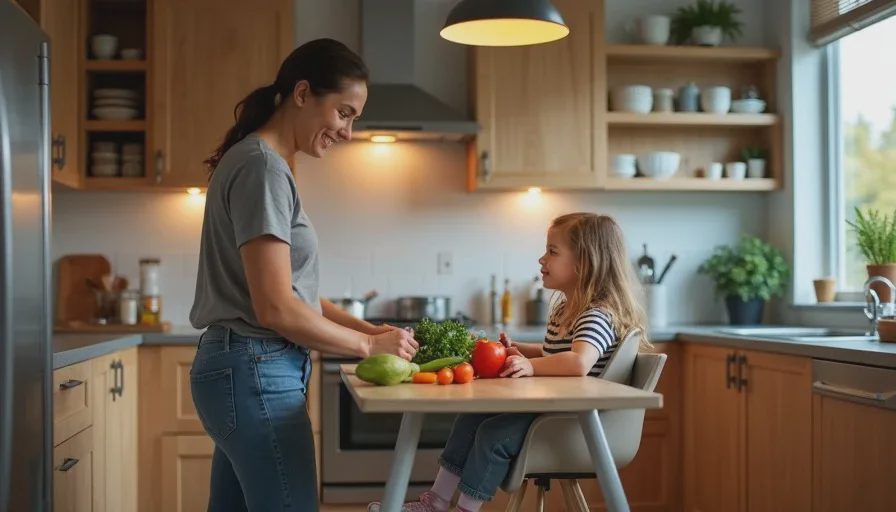
Here's the honest breakdown. Mae gets about 20-30 minutes of screen time on most days, usually while I'm prepping dinner. Sometimes zero. Rarely more than 40 minutes, and only if someone is sick or the weather has been brutal for three straight days. I approach her screen time the same way I plan her other toddler activities at home — with intention, but without rigidity.
The Content I'm Comfortable With
Not all screen time is the same thing. After watching Mae with different types of content, I've sorted what she watches into categories:
Content Type | Example | What I Notice After | Developmental Value |
|---|---|---|---|
Slow-paced educational shows | A show about a blue dog figuring things out | She reenacts scenes, uses new words | High — models problem-solving, language |
Fast-paced animated shorts | Bright, loud clips from streaming | She gets cranky, harder to transition off | Low — overstimulates, hard to process |
Video chat with grandparents | FaceTime with Nana | She talks about it later, feels connected | High — social connection, relationship building |
Our family videos | Old clips of Ollie as a baby | She points, laughs, asks to watch again | Moderate — shared memory, vocabulary |
The pattern I've seen is clear: slower pacing and conversational tone lead to better play afterward. Fast, flashy content leads to a meltdown when I turn it off. That's not a study — it's what I've logged in my toddler field notebook over the past six months. Your kid may react differently, and that's valid.
What We Do Instead of Screens
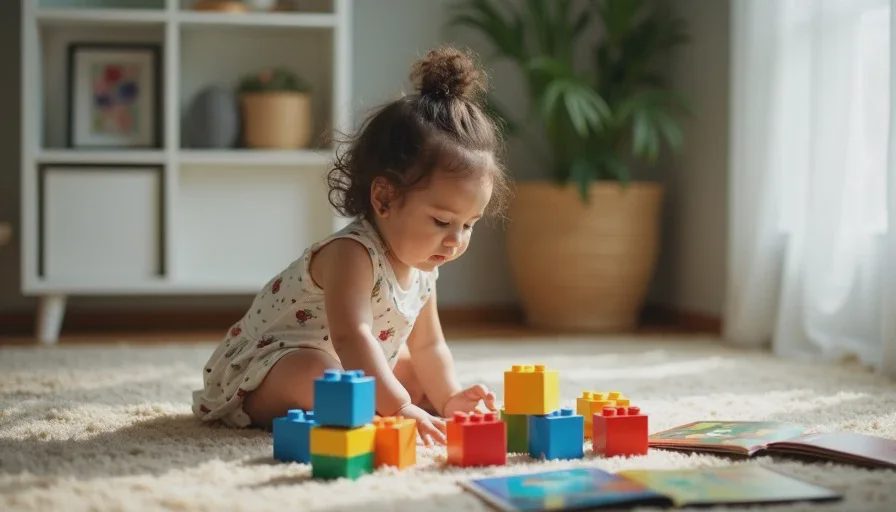
The reason I'm not panicked about screen time is that screens are a small slice of Mae's day. The bigger question — the one I think matters more — is what fills the rest of her hours. When I think about toddler activities at home, I think about what I set up in my classroom: open-ended materials, movement, sensory play, and books.
Here's what a typical no-screen morning looks like for us:
Breakfast together, then she "helps" me wipe the table
20-30 minutes of free play with blocks, Duplos, or her kitchen set
A walk to the mailbox or around the block — she walks, I follow
One read-aloud session on the couch (we read the same book four times in a row because that's what she wants)
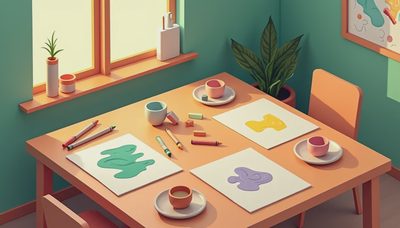
Snack, then either a library trip or a simple activity at the table
None of this is fancy. Most of it is stuff she initiates and I follow. The point isn't to fill every minute with enriching activities — it's to make sure screens aren't the default. When the default is "go play," she goes and plays. When the default is "hand her the phone," that's what she expects.
What I'd Tell My Pre-Mom Teacher Self
If I could go back to my preschool-teacher self, standing in that classroom with strong opinions about families who let their kids watch TV, I'd tell her this: you don't know what their day looks like. You don't know if that mom was up at 3 a.m. with a teething baby, or if that dad just got home from a 12-hour shift. A measured amount of screen time in an otherwise rich, connected day is not the same as parking a kid in front of a screen for hours.
I don't judge the parent who lets their 2-year-old watch a show so they can shower. I don't judge the parent who goes screen-free. What I care about is intentionality — knowing why you're doing it, noticing how your kid responds, and adjusting.
And if you're worried that you've let screens creep in too much? Pull back a little. Find one screen-free hour and fill it with something simple — a walk, a book, a bowl of water and some cups on the kitchen floor. Toddlers don't need elaborate setups. They need presence, a few interesting materials, and permission to explore at their own pace.
It's a season, not a race. The screen time habits you have at 2 are not the habits you'll have at 4 or 6. Ollie watches more now than Mae does, and we manage it differently because he's older and his needs are different. You'll adjust as your kid grows. Trust that.

Travellers Write
No letters yet — be the first traveller to write.