The best art projects for 3 year olds are not the ones that produce a perfect paper plate animal. They are the ones your child can start without a long explanation, explore with both hands, and abandon when a snack suddenly becomes urgent. At three, the process matters far more than the finished picture. A blob of purple paint, a line that goes off the paper, and a pile of stickers can all be meaningful work.
I spent eight years watching toddlers and preschoolers create in a classroom, and now I see the same wonderfully unpredictable process with my own two-year-old, Mae. The setup does not need to look like a craft store display. A washable table covering, a few basic supplies, and ten unhurried minutes are enough. It is a season, not a race.
What a Three-Year-Old Can Really Do With Art
Three-year-olds are developing hand strength, coordination, language, and the ability to make choices. Art gives them a low-pressure way to practice all four. They can squeeze glue, peel a sticker, make short and long marks, press a sponge, tear paper, and name colors. Some children will draw recognizable people or houses. Others will make circles, swirls, and dramatic lines. Both are appropriate.
When you offer art projects for 3 year olds, try not to demonstrate a finished product first. If you draw a smiling sun, your child may decide that the assignment is to copy your sun rather than explore the materials. Instead, describe what is available: “You have yellow paint, a wide brush, and a small sponge.” Then let your child decide what happens next.
A three-year-old may work for five minutes, leave the table, and return later. That is not failure or a short attention span that needs fixing. It is normal preschool play. Keep the activity available for a reasonable stretch, and accept that the final result may be a very small piece of paper covered in one favorite color.
Five Easy Projects With Supplies You Probably Have
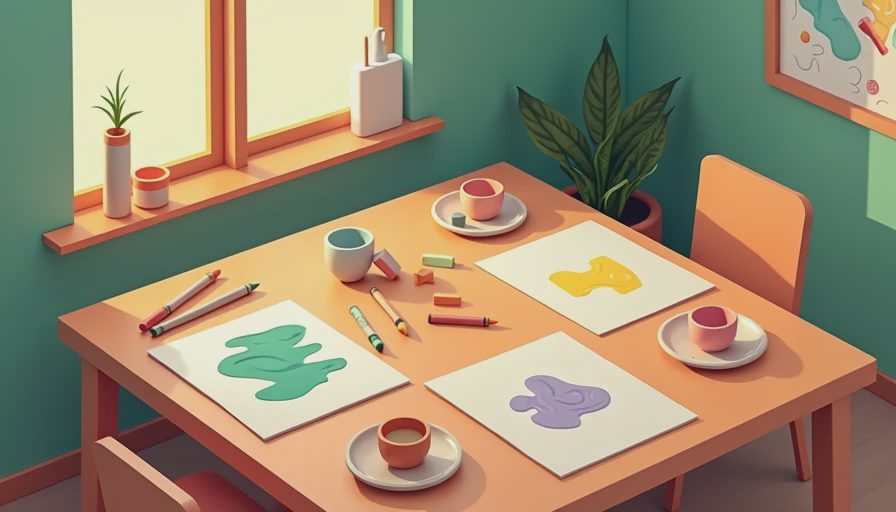
For a color-smearing activity, tape a sheet of large paper to the table and put small dots of washable tempera paint on it. Add a sheet of clear contact paper over the top, sticky side down, or place the paint and paper inside a sealed plastic bag. Your child can press, swipe, and mix colors without getting paint on their sleeves. Talk about what happens when blue and yellow meet, but do not turn it into a quiz.
Paper tearing is another excellent choice. Offer construction paper, old magazine pages, or tissue paper and let your child tear pieces into a bowl. Draw a simple line or shape on paper and help glue the pieces inside it. The result can be a pretend garden, a colorful monster, or simply a textured collage. Tearing paper uses both hands and builds control needed later for scissors and drawing.
For a nature print, collect a few sturdy leaves during a walk. Place one under paper and rub the side of a crayon over the top. You can also dip a leaf lightly in paint and press it onto paper. Check that the leaves are clean and avoid plants you cannot identify. The interesting part is comparing the lines, edges, and shapes rather than naming every tree.
Sponge painting works well when your child wants to make a big mess quickly. Cut kitchen sponges into large pieces, or use a clean makeup sponge, and provide two or three paint colors. A cardboard box can become the work surface. This is one of the most forgiving art projects for 3 year olds because the prints do not need to resemble anything.
Sticker stories require almost no cleanup. Give your child large stickers, plain paper, and crayons. They might place a dog sticker on a road made from scribbles, cover the page in dots, or use every sticker on one corner. Resist moving stickers into a prettier arrangement. Peel the edge of a sticker if needed, but let your child do the placing.
How to Set Up Without Losing Your Whole Afternoon
The setup determines whether an activity feels manageable. Use a tray or shallow baking sheet for supplies, so crayons and glue sticks do not roll under the couch. Cover the table with a washable vinyl tablecloth, flattened cardboard, or a grocery bag opened along the seams. Keep a damp washcloth nearby before the first paint bottle opens.
Choose washable materials labeled for children, and supervise closely whenever your child uses scissors, small collage pieces, beads, or anything that could become a choking hazard. At three, many children can use blunt-tip preschool scissors, but they still need an adult within reach. Store messy supplies up high when the activity ends.
You do not need to offer every color and tool at once. Two paint colors, one brush, and one sponge often lead to more focused play than a full bin of options. If your child dumps everything on the floor, calmly narrow the choices and say, “The markers are resting while we use the glue.” Clear limits make the activity easier, not less creative.
Art Projects for 3 Year Olds That Build More Than Fine Motor Skills
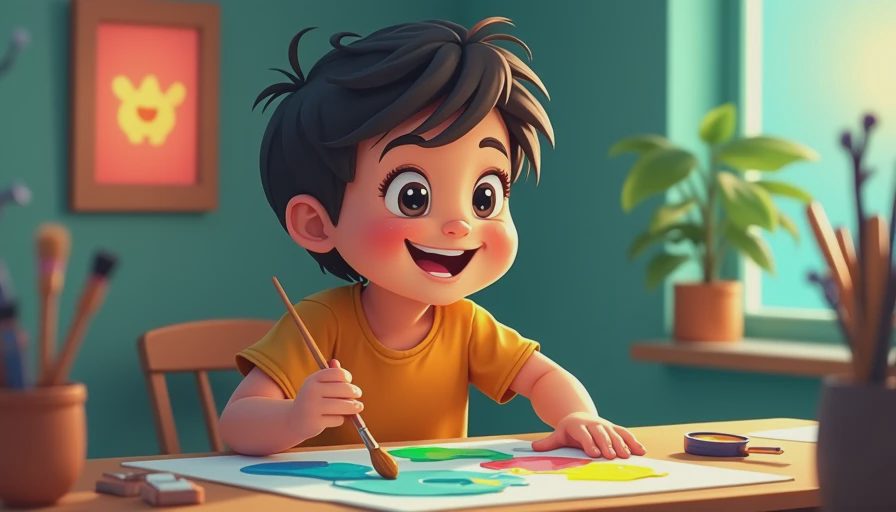
Craft time can support language without becoming a lesson. Ask open questions such as “What do you notice?” or “Tell me about this part.” If your child says, “It is a rocket,” follow that idea even if you see a scribble. You can add vocabulary naturally: smooth, sticky, bumpy, dark, pale, curved, and enormous.
Art also gives children practice with frustration. Glue may come out too fast. A paper strip may tear. A marker may dry out. Pause before fixing everything. You might say, “That did not work the way you expected. What could we try?” Sometimes the answer is another piece of paper. Sometimes it is walking away. Both are reasonable solutions for a three-year-old.
Try process-focused comments instead of appearance-based praise. “You pressed hard with that crayon” tells your child what you observed. “You used three different shapes” encourages attention and memory. Specific comments help children understand that art is about decisions and experiments, not pleasing an adult.
A Low-Stress Weekly Rhythm
You could place one art invitation on the table two or three times a week. Monday might be crayons and recycled cardboard. Wednesday could be stickers and paper. Saturday might be sponge painting outside or at the kitchen table. Repeating familiar materials lets your child become more independent. You do not need a new Pinterest idea every morning.
Save a few pieces in a folder, but do not feel obligated to keep everything. Photograph especially funny or interesting work before recycling it. One page may show a new pencil grip, stronger circles, or a story your child told while drawing. Those details are often more valuable than a flawless craft.
If your child refuses, that is information rather than a problem. Maybe the paper feels too small, the paint is cold, or the day has already been too busy. Offer the invitation again another time. The goal of art projects for 3 year olds is not compliance. It is a chance to explore, communicate, and feel capable.
When the Project Goes Sideways
Paint may land on the floor. A child may squeeze out the entire glue bottle. The carefully prepared craft may last ninety seconds. This is ordinary life with a preschooler. Keep expectations small enough that the cleanup does not outweigh the fun. A washable smock, a limited supply of materials, and a clear ending phrase can help: “We have five more minutes, then the brushes go in the sink.”
For art projects for 3 year olds, success can mean your child made one mark and named a color. It can mean they asked for more paper, solved a sticky problem, or stayed nearby while you created. Offer the materials, protect the process, and let the picture be whatever it becomes. Your child is not behind because the craft does not look like the example. They are growing on their own timeline, one wonderfully messy page at a time.
Travellers Write
No letters yet — be the first traveller to write.