
Three years ago, I was standing in Mae's nursery at 2:47 a.m., watching my not-quite-one-year-old pull herself up to standing for the first time — in the dark, in her sleep sack, while I was running on four hours of broken rest. My first instinct wasn't joy. It was panic. Was she supposed to be doing this now? Was this early? Was this late? I had spent eight years in a preschool classroom tracking toddler developmental milestones on clipboards and observation sheets for a living. And here I was, in my own hallway, second-guessing everything I knew. That gap between what I knew professionally and what I felt at 3 a.m. is the reason this blog exists.
Why I Stopped Teaching and Started Writing
I left my classroom at a Seattle-area early learning center when Mae was born, but I never stopped being a teacher. I just changed who I was teaching. After eight years with kids ages one through five, I had a framework for understanding toddler developmental milestones — the normal ranges, the wide windows, the signs that actually matter. But motherhood has a way of making you forget your own training when you're sleep-deprived and scrolling through "is my toddler okay" searches at 4 a.m.
The blog came out of that tension. I'd read clinical articles that were accurate but cold. Then I'd scroll through mom-fluencer posts that were warm but full of fear dressed up as encouragement. Neither one helped me at 3 a.m. I wanted to write the thing I couldn't find — something from someone who holds both a teacher's clipboard and a mom's coffee cup.
Who We Are
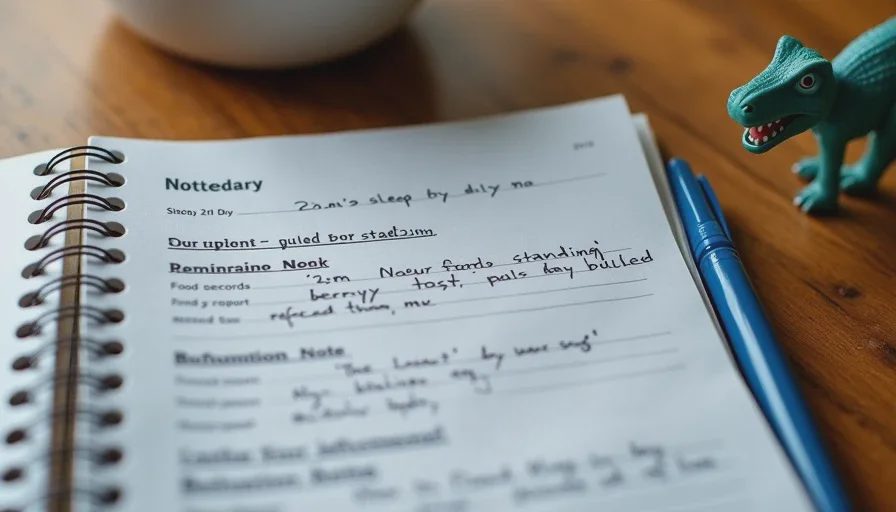
I'm Hannah. Thirty-five. I live in Seattle with my husband Mike, a software engineer at one of the tech companies here. He's the rational one at 3 a.m. — I call him the calm baseline. Our son Ollie is six, in kindergarten, and currently obsessed with LEGOs and audiobooks from the library. Mae is two, and she is the reason half of these posts exist — mostly because she hit every single one of her milestones at 3 a.m. I keep what I call a toddler field notebook: a spiral notebook where I log her sleep, food, and behavior in the same observation-sheet shorthand I used for my classroom kids. Mike thinks it's charming. I think it's the only reason I still remember anything.
The Gap I Kept Running Into
There's a wide space between what developmental experts say and what anxious parents absorb online. The expert says "most children walk sometime between 12 and 18 months" — a range, a window. The influencer says "my baby walked at 9 months, here's what I did differently." One is clinical. The other quietly manufactures panic. Neither tells you what to do at 10 p.m. when your fourteen-month-old isn't walking yet and your stomach is tight.
I kept falling into that gap with Mae. I'd read a milestone chart and know, professionally, that the ranges are wide and normal. Then I'd see a post about someone's kid doing something "early" and I'd feel the familiar squeeze. Not because I doubted the science — because the noise around the science was so loud. Even with eight years of training, I needed the reminder that toddler developmental milestones are about direction, not speed.
What This Blog Is — and Isn't
This blog is not a place for "fix this by age three or else" thinking. It's not a place to take sides in the attachment-versus-sleep-training wars. I'm not going to tell you there's one right way to raise a toddler, because in eight years of classrooms I watched dozens of healthy, thriving kids get there through completely different paths.
What this blog is:
A calm, practical companion for the 3 a.m. versions of yourself
A place where toddler developmental milestones are explained in plain language, with the ranges and the context that experts assume you already know
Concrete steps, not vague reassurance — when I say "try this," it's something I've actually done in a classroom or at home
Honest talk about when something genuinely warrants a call to your pediatrician versus when it's just a developmental bump that resolves on its own
It's a season, not a race. I repeat that to myself more than I repeat it to anyone reading.

What You'll Find Here Going Forward
I've organized the blog around the categories that come up most in the parent workshops I still run occasionally — feeding, sleep, development, and the messy, unglamorous family life that holds it all together.
Here's a quick breakdown of what's coming:
Category | What It Covers |
|---|---|
Small Bites | Feeding toddlers, table battles, picky eating, quick meals and snacks |
The Hardest Hours | Sleep regressions, potty training, tantrums, the daily battles |
Growing on Time | Milestones, language development, screen time, early learning |
Two Kids Deep | Family life, the toddler field notebook, Seattle family hikes, honest mom-life essays |
I'll write from lived experience — my classroom years, my own two kids, and the workshops I lead. No fabricated data. No invented studies. If I reference something, it's because I've seen it in a classroom or lived it in my own house.
My Promise to You
I won't sugarcoat the hard parts. Toddlerhood is exhausting, confusing, and sometimes genuinely scary. But I also won't manufacture urgency where there isn't any. Most of what keeps parents up at night falls well within normal development — and when it doesn't, I'll tell you what to look for and where to turn. That's the approach I'll bring to every post about toddler developmental milestones: notice, ask, and let the pattern tell the story.
A few notes on how I think about toddler developmental milestones, so you know where I'm coming from:
Ranges exist for a reason. A child who walks at 11 months and a child who walks at 16 months can both be completely on track.
Milestones are checkpoints, not report cards. They help you notice, not judge.
A toddler's growth is rarely a straight line. Most kids leap, plateau, and leap again.
Your pediatrician is part of the team. If you're worried, ask — that's what they're there for.
So that's the manifesto. I'm Hannah. I'm a teacher, a mom, a Seattle parent with a spiral notebook and a strong coffee habit. If you're reading this at 3 a.m., I see you. I've been there. And I'm going to do everything I can to help you get back to sleep.



Travellers Write
No letters yet — be the first traveller to write.