Family birthdays can look wonderfully simple in photos and feel like a small logistical operation in real life. Someone is crying, the cake is leaning, and your two-year-old has decided the carefully chosen present is less interesting than the wrapping paper. I have learned that family birthdays work best when the plan respects a toddler's short attention span, changing mood, and very real need for a snack every 90 minutes.
The goal is not a picture-perfect party. It is a warm memory that does not leave every adult completely drained. A toddler does not need an elaborate theme, a rented venue, or twelve activities. They need familiar people, predictable food, a little space to move, and a parent who is not trying to run an event while also preventing a sugar crash.
Start With the Birthday Child's Rhythm
The most useful birthday decision is often the least exciting one: choose a time that fits your child's normal schedule. If your toddler naps from 1 to 3 p.m., a noon lunch or a 4 p.m. visit will usually go better than a party scheduled in the middle of that nap. A tired toddler may appear delighted for ten minutes and then collapse because one cousin touched a balloon.
For family birthdays, I prefer a gathering of about 90 minutes to two hours for children under three. That gives everyone time to arrive, eat, sing, open a few gifts, and leave before the child reaches the cliff edge. Put the main food out soon after guests arrive rather than saving it for a formal moment. Hungry toddlers do not care that the grandparents are still parking.
Think about the first five minutes, too. Keep coats and shoes in one place, put water cups where adults can see them, and have a quiet corner ready with board books or blocks. When Mae turned two, the quiet corner was simply a blanket beside the couch. She used it twice, but knowing it existed helped me avoid turning every frustrated moment into a crisis.

Choose Food That Does Not Create Extra Work
A birthday menu can be festive without becoming a second job. Offer two or three foods your child already eats, plus something adults will enjoy. Mini sandwiches, fruit, cheese, pasta salad, muffins, and cut vegetables are easier to serve than a meal that requires everyone to sit at once. For a toddler, food should be cut into safe, manageable pieces and served with close adult supervision.
I usually make one reliable snack the day before, such as banana muffins or oat bars, and buy the rest. A grocery-store rotisserie chicken, prepared fruit tray, or frozen pizza is not a parenting failure. It is a practical choice that leaves more energy for greeting relatives and helping your child through the exciting parts of the day.
Keep sweets modest and serve them after some ordinary food has been eaten. A small slice of cake is plenty for many toddlers, especially when they are already overstimulated. Have milk or water available, and remember that a child who refuses cake is not wasting the birthday. Mae once rejected a cupcake and ate cucumber slices from a party tray instead. The adults were more bothered than she was.
Make Gifts Manageable
Gift opening is a surprisingly intense part of family birthdays. Toddlers often do not understand why they should stop playing with one toy to unwrap another. They may cling to the first box, become upset when paper is removed, or lose interest after two presents. None of this means they are ungrateful.
You can open gifts slowly, place unwrapped items in one area, and pause whenever your child needs a break. Ask relatives to avoid bringing noisy toys if your home is already full of sound. A short wish list with books, washable art supplies, simple puzzles, dress-up items, or outdoor equipment gives people useful direction without making the celebration feel transactional.
For family birthdays, experiences can be lovely gifts, but choose ones a toddler can actually use. A zoo membership, library contribution, or pass for a local children’s museum may be more valuable than another plastic vehicle. If relatives live far away, a video call can be sweet, but keep it short. Toddlers are not obligated to perform affection for a camera.
Keep the Guest List Comfortable
There is no universal correct size for family birthdays. Some toddlers enjoy a busy house; others spend the entire gathering pressed against a parent’s leg. Watch your child in ordinary group settings before deciding. If playdates with three children already feel intense, inviting 25 people may create more recovery work than celebration.
A useful compromise is to divide visits across a weekend. One set of relatives can come for breakfast, while another visits for cake the next afternoon. This gives grandparents meaningful time with the birthday child and protects the child from a single long, noisy event. It also helps adults who travel or work unusual schedules.
Tell guests what to expect in advance. Say that the party will end around a specific time, that the toddler may not hug everyone, and that nap timing matters. Clear information prevents well-meaning relatives from pushing for one more game, one more photo, or one more bite of cake when your child is finished.
Create Low-Pressure Birthday Traditions
Toddlers remember repeated rituals more readily than expensive details. You might serve pancakes with a candle, take a photo in the same chair, read one favorite book, or let the birthday child choose between two dinner options. These small patterns give family birthdays an emotional center without requiring a complicated theme.
A birthday interview can become a gentle tradition as your child grows. Ask, “What should we eat?” or “Which book do you want today?” Do not expect a polished answer. At two, the response might be “blue truck” to every question. Write down a few words anyway. In a couple of years, the notes will show how much has changed.
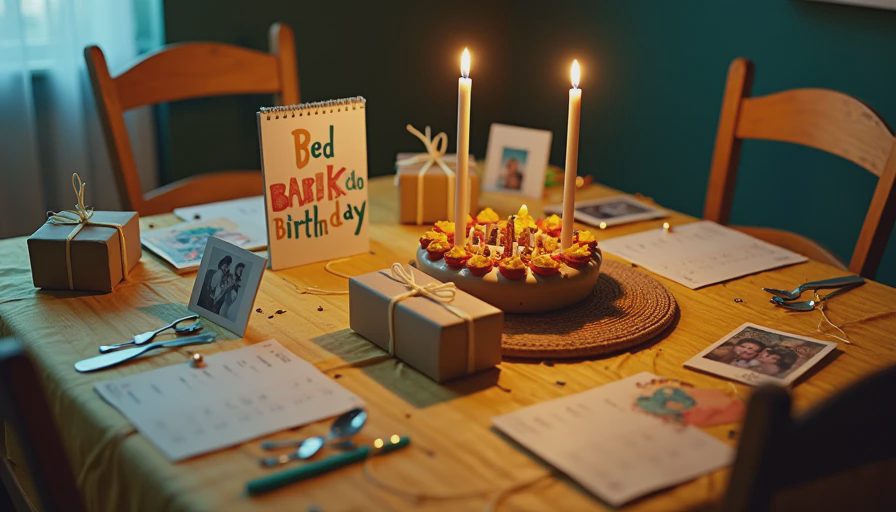
Decorations should be secure and simple. A paper banner, a few large balloons kept away from unsupervised children, and a tablecloth can change the room without filling every surface. Skip anything that creates a choking hazard or requires constant monitoring. The best decoration is often a clear floor where children can crawl, toddle, and play.
A Calm Plan for the Day After
Even a happy celebration can leave a toddler worn out. Keep the next morning ordinary: familiar breakfast, outdoor time if possible, and the usual nap or quiet period. You do not need to continue the birthday excitement for several days. Put new toys away if the room becomes overwhelming and introduce them one at a time.
For family birthdays, I also recommend taking five minutes that evening to write down what worked. Was the gathering too long? Did the food disappear quickly? Did your child need a quieter arrival? My toddler field notebook has notes that are not remotely poetic, including “cake at 3:45 was terrible” and “pancakes before guests: excellent.” Those observations are more useful than a perfect photograph.
If the day goes sideways, it has not failed. A toddler crying during the song, refusing a present, or falling asleep before cake is still having a birthday. Adults can carry the meaning until children are old enough to understand it themselves. Family birthdays do not need to prove anything about your parenting, your home, or your child’s happiness.
The sweet spot is a celebration with enough structure to feel special and enough flexibility to follow the child in front of you. Feed them early, protect their rest, lower the entertainment expectations, and let familiar people do some of the work. It is a season, not a race, and the simple birthdays are often the ones families remember most clearly.


Travellers Write
No letters yet — be the first traveller to write.