
Every parent has the moment. The one where you're at the playground, another toddler is doing something yours isn't, and your chest gets tight. I had that moment myself three years ago, in my own kitchen, watching Mae — and I'd spent eight years in a preschool classroom reading toddler developmental milestones off clipboards. The honest truth I learned in those classrooms, and again as a mom: the milestone chart scares more parents than it helps. So let me read it with you — not as a judgment sheet, but as the working document it was actually meant to be.
How I Learned to Read Milestone Charts
When I started teaching, a senior teacher handed me a laminated milestone chart and said, "This is your map, not your report card." That stuck with me. In eight years of classrooms with kids ages one through five, I saw firsthand how wide the normal range really is. Two children in the same class could be months apart on the same skill, and both were completely fine. One kid walked at 12 months. Another walked at 17 months. Both of them ran around the same playground by age two.
A milestone is a checkpoint, not a test. It tells you that a child's development is moving in the right direction. It doesn't grade how fast, and it doesn't predict how a child will do in kindergarten or in life.
What the Chart Is Actually Telling You
The most important thing I tell parents in my workshops is this: milestones come in ranges for a reason. The "average" age is not the "deadline" age. Here's how I explain the difference:
What People Think | What the Chart Really Means |
|---|---|
"He should be doing this now" | "Most kids do this within a window of several months" |
"If she's late, something's wrong" | "Late for one milestone often means early for another" |
"Early means gifted, late means behind" | "Early and late both fall inside normal, usually" |
"One chart fits all kids" | "Charts are snapshots of groups, not blueprints for one child" |
When I saw a child in my classroom who was outside the typical window, I never panicked on day one. I watched. I took observation notes. I asked the parents questions about home life. Nine times out of ten, the child was just taking their own route through toddler developmental milestones — leaping in some areas, pausing in others.
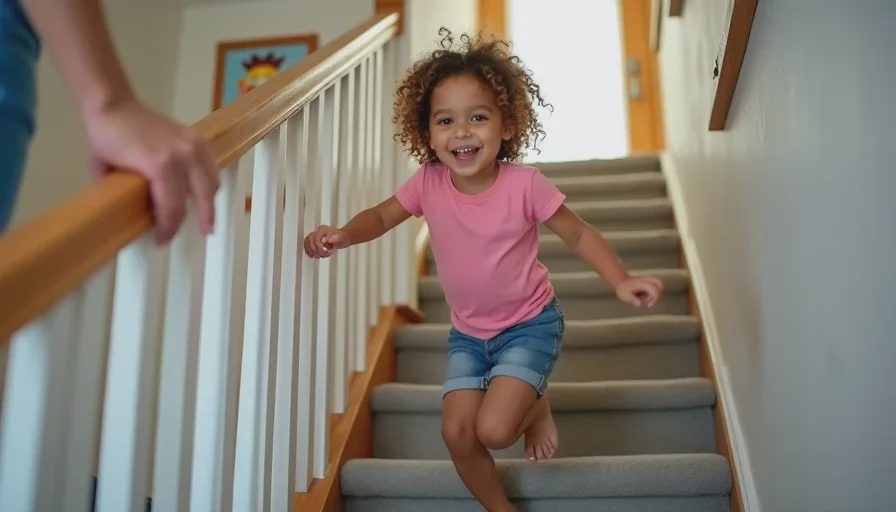
What "Normal" Looks Like at Each Age
Let's walk through the ages parents ask me about most, one to three. I'm going to keep it practical, because I know you're reading this between a tantrum and a snack time.
Around One Year
By their first birthday, most toddlers I taught were pulling to stand, cruising along furniture, and saying a few words like "mama" and "dada." Some were walking. Some were nowhere near walking and completely content to cruise. Both groups moved into confident walking eventually. Language was just as variable — some one-year-olds had ten words, some had two. Both are normal. This is the first lesson of reading toddler developmental milestones: the spread inside "normal" is wider than any new parent expects.
At Two Years
Here's the question I get more than any other, often word for word: what should a 2 year old be able to do? So let's answer it directly. Most two-year-olds I worked with could:
Walk, run, climb, and push or pull toys confidently
Say around 50 words and start putting two words together ("more milk")
Follow simple two-step directions ("get your cup and bring it here")
Point to things they want and name basic body parts
Engage in parallel play — playing near other kids, not with them yet
Begin to show a preference for one hand, though lots switch back and forth
And here's what plenty of completely healthy two-year-olds did not do yet: speak in full sentences, share toys willingly, stay dry at night, or use a fork without dropping half of it. None of that predicted a thing about how they did in preschool later.
At Three Years
By three, the children in my room could usually have short conversations, ride tricycles, and play simple pretend games with each other. But even at three, I had kids who preferred to watch before joining in, kids who talked in paragraphs, and kids who still used short phrases. All of them were on track in their own way.
Here's a snapshot of the different areas of toddler developmental milestones, and what to watch in each:
Area | What You'd Notice Between 1 and 3 |
|---|---|
Motor skills | Sitting, crawling, walking, running, climbing stairs |
Language | First words, vocabulary growth, two-word phrases |
Social-emotional | Pointing, waving, imitating, playing near other kids |
Cognitive | Matching, sorting, simple pretend play, following directions |

When to Actually Call the Pediatrician
I don't want you panicking over every plateau. But I also don't want you ignoring real signals. After all my years in classrooms, here's the short list of things that genuinely warrant a call to your pediatrician — not because your child is "behind," but because an expert should look:
Loss of skills — a child who was talking or walking and stops (this is always worth checking)
No babbling or gesturing by 12 months, and no single words by 16 months
No two-word phrases by age two
No walking by 18 months
No interest in people, pointing, or imitating by age two
A gut feeling that won't go away — parents are usually right when they sense something
Notice what's not on the list: not talking much at 18 months, not using a fork neatly at two, not sleeping through the night, not sharing at two and a half. Those are the things I see parents agonize over, and in my experience, they almost always resolve on their own. Most toddler developmental milestones have wide windows — the items on that list are the rare exceptions genuinely worth checking.
Why Ranges Are Wide, and That's Okay
Here's what eight years of observation notes taught me. A toddler's growth is not a straight line. Kids leap ahead in language and stall in motor skills. They master something, regress for a week, then come back stronger. Mae went through a stretch where she barely added new words — then she woke up one morning saying "okay," "apple," and "bye-bye" in the same hour. If you're asking what should a 2 year old be able to do, you're in good company — it's the single most-asked question in my parent workshops, and the answer is usually wider than anyone expects.
I logged it in my toddler field notebook, the way I used to log my classroom kids. Patterns tell you more than single moments ever do. If you look at a whole month, you see the direction a child is moving. If you only look at today, you'll miss the forest for the tree.
It's a season, not a race. I've repeated that sentence to worried parents in workshops, and I repeat it to myself when the 3 a.m. doubts creep in. Toddler developmental milestones are a map with wide paths, not a race with a single finish line. Your child is not being graded. Neither are you.



Travellers Write
No letters yet — be the first traveller to write.