Sticker books for 2 year olds can buy you ten quiet minutes, support early learning, and give busy little hands something purposeful to do. They can also produce a sticker-covered dog, a frustrated toddler, and one surprisingly sticky couch if the activity is not a good fit. I have used them both as a preschool teacher and with my own two-year-old, Mae, and the biggest lesson is simple: the best activity is not the fanciest one. It is the one your child can actually manage.
At this age, sticker play is less about finishing a page perfectly and more about practicing small movements, making choices, and enjoying a bit of independence. A toddler might place every sticker on the same corner or abandon the book after three stickers. That is normal. It is a season, not a race.
What to look for before you buy
When you compare sticker books for 2 year olds, start with the stickers rather than the cover art. Look for large, easy-peel stickers with a clear edge. Tiny stickers are difficult for developing fingers and can quickly become a choking concern. Reusable vinyl stickers can be useful, but check the packaging and supervise closely, especially if your child still mouths objects.
The pages matter, too. Thick paper handles enthusiastic peeling better than thin activity sheets. Simple pictures with plenty of open space usually work better than crowded scenes. A farm page with a cow, barn, and pond gives a toddler room to make choices. A detailed city scene with forty tiny stickers may be attractive to an adult but overwhelming to a two-year-old.
Choose themes your child already recognizes: animals, vehicles, food, bugs, or familiar household objects. A child who loves garbage trucks may ignore a beautiful garden book and spend twenty minutes happily parking trucks on a plain page. Interest is the engine here, not educational packaging.
Check the age guidance, but treat it as a starting point rather than a test. Some children can peel and place stickers shortly after turning two; others need help for months. If a product includes small pieces, use it at the table with an adult nearby and put the book away when play ends.
The developmental skills sticker play supports
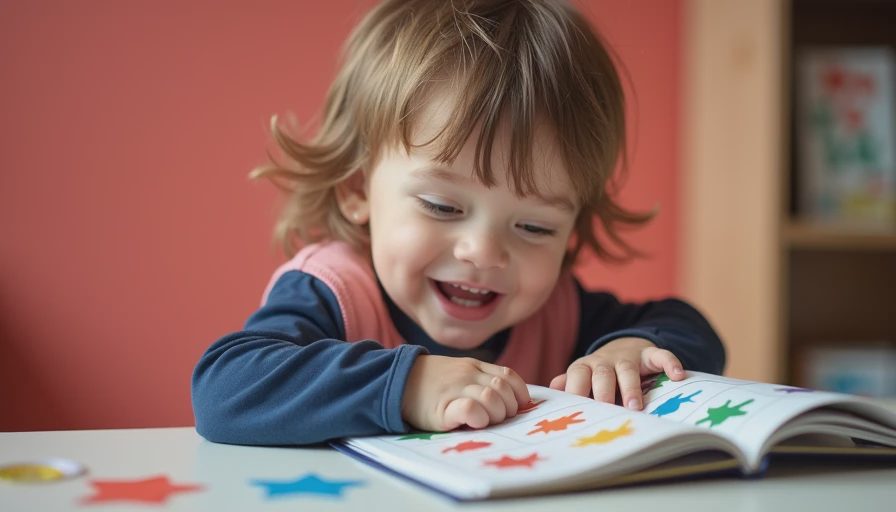
Sticker books for 2 year olds offer a surprisingly rich kind of play. Peeling a sticker strengthens the tiny muscles in the fingers and hands that later help with crayons, utensils, scissors, and clothing fasteners. Picking up one sticker at a time also encourages a toddler to slow down and coordinate what the eyes see with what the hands do.
There is language practice tucked into the activity as well. You can talk about color, size, location, and action without turning it into a lesson. Try, “You put the blue car beside the bus,” or “The puppy needs a place to sit.” These short comments build vocabulary while keeping the child in charge.
Sticker play can also support early problem-solving. A toddler may discover that a sticker bends, sticks to a finger, or will not come off the page in one piece. Instead of taking over immediately, pause and offer one small suggestion: “Try lifting this corner.” That gives your child a chance to persist without turning the activity into a struggle.
Do not worry if the stickers do not match the printed spaces. Matching is one possible activity, not the goal. Free placement develops decision-making and imagination. In my classroom, children often turned an intended animal scene into a completely new story. Mae once used every fish sticker to make a “fish blanket” for a whale. It made perfect toddler sense.
How to make the activity easier for a toddler
Set up sticker books for 2 year olds when your child is reasonably rested and fed. This is not always possible, especially if you are hoping to occupy a toddler while making dinner, but timing changes everything. Five minutes after a snack may go beautifully; five minutes before bedtime may end with stickers being thrown.
Begin by peeling back a small corner of each sticker sheet. This is often the difference between success and an immediate cry of “I can’t!” You can also place the sheet on the table rather than handing it over while your child is walking around. A stable surface gives both hands a better chance to work.
Offer one page and a few stickers at a time. Too many options can lead to grabbing, dropping, and frustration. If your toddler wants to put stickers on the table, a sheet of plain paper can provide an approved surface. Painter’s tape on the floor or a wipeable tray can also create a clear boundary for the activity.
Keep your language low-pressure. Say, “Where should this one go?” rather than “Put the apple in the basket.” If your child places it upside down, resist the urge to correct it. You can describe what happened without judging: “The apple is resting on the roof.” That keeps the play creative and protects the child’s growing confidence.
Choosing between reusable and paper stickers
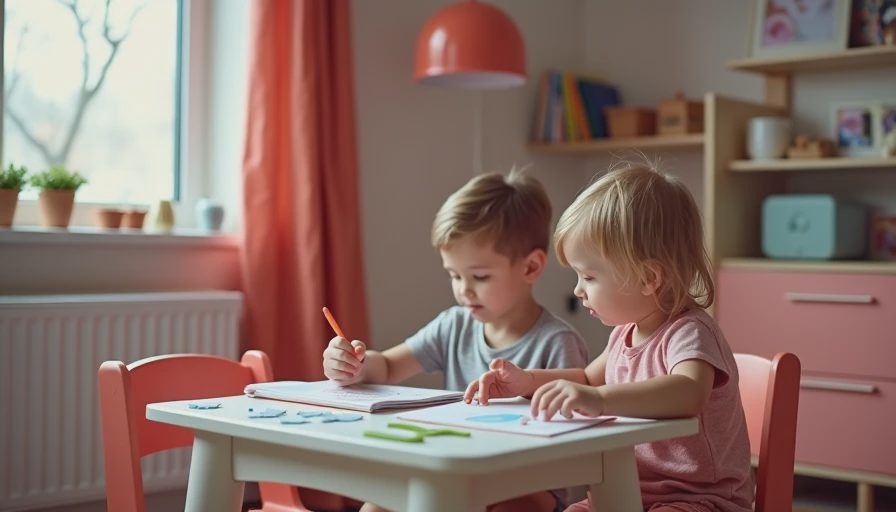
Reusable sticker books for 2 year olds are appealing because the activity can last longer and the pages are usually easy to wipe clean. They can be especially handy for restaurants, waiting rooms, or travel. The tradeoff is that reusable stickers may be thicker and more tempting to bend, fold, or mouth. They also sometimes lose their grip after collecting lint from carpets and clothing.
Paper stickers are less expensive and often offer more variety. They work well for a one-sitting craft, a rainy-day table activity, or a homemade collage. The downside is that they cannot usually be repositioned, and a determined toddler may remove the entire page along with the sticker.
For most families, having one reusable book and a small stack of inexpensive paper books is enough. You do not need a large collection. Rotating the same few activities can make them feel fresh, especially when you add crayons, toy animals, or a cardboard box to the play setup.
Simple ways to extend the play
Once your toddler has explored sticker books for 2 year olds, you can move the idea into ordinary household play. Draw a road on a piece of paper and let your child place vehicle stickers along it. Make a pretend grocery list with pictures of food. Put a few animal stickers on a paper plate and sing a farm song. These extensions take less than five minutes to prepare and do not require a themed kit.
You can also use stickers to support routines without making them a reward chart. A child might place a sticker on a paper handwashing picture after practicing the steps, or add one to a homemade bedtime story page. Keep the focus on participation rather than collecting a certain number. Toddlers do not need a productivity system; they need repeated, warm practice.
For travel, pack a thin book, a clipboard, a few blank sheets, and a zippered pouch. Avoid bringing the entire sticker supply. One small set is easier to supervise and less devastating if it disappears under the car seat. A washable marker can add roads, houses, or circles when the stickers run out.
When your toddler is not interested
Even the best sticker books for 2 year olds will be ignored sometimes. Your child may prefer tearing paper, lining up blocks, or carrying a spoon from the kitchen to the living room. That does not mean you chose badly or that your toddler is behind. Interest changes quickly at this age.
Try modeling the activity quietly instead of asking your child to join. Peel one sticker, place it on the page, and narrate what you are doing. Sometimes a toddler joins after watching for a minute. Other times, the correct response is to close the book and try again next week.
If your child becomes upset, remove the pressure first. Help with one sticker, change to larger pieces, or offer a blank page. A calm adult is more useful than a perfectly completed scene. The point is connection, practice, and a little manageable independence—not a finished product for the refrigerator.
For most families, sticker books for 2 year olds are a low-cost, flexible addition to the activity shelf. Choose large stickers, sturdy pages, familiar themes, and realistic expectations. Keep the book nearby for quiet moments, supervise small pieces, and let your toddler make gloriously imperfect choices. That is where the learning is happening.


Travellers Write
No letters yet — be the first traveller to write.