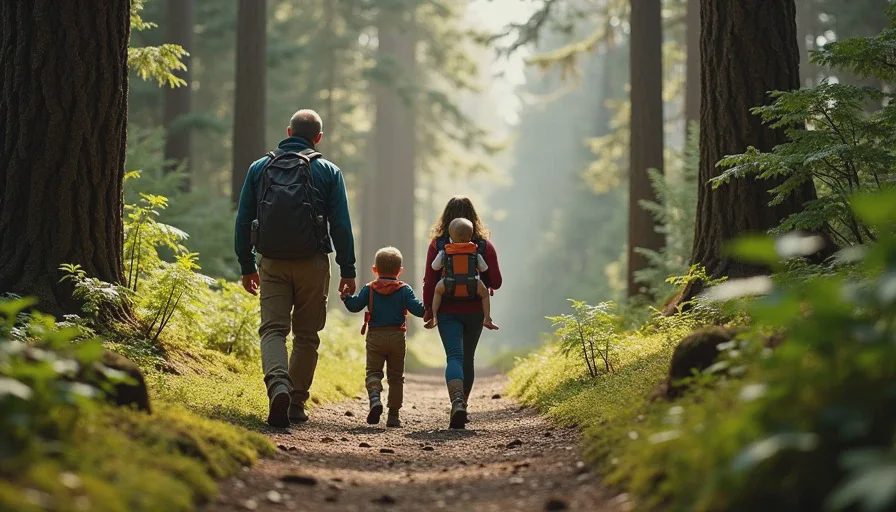
When Ollie was 2, Mike and I tried a "real" hike — the kind we used to do pre-kids, with elevation gain and a destination at the end. We lasted about 15 minutes before Ollie sat down on the trail and announced he was done. That was the day I learned that hiking with a toddler is a completely different activity than hiking without one. Now Mae is 2, and we've been hitting Pacific Northwest trails with her for the past year. These days, when I plan toddler activities at home, I often don't mean indoors — some of our most valuable time together happens on the trails around Seattle. Here's what I've learned about which trails actually work, how far a 2-year-old can walk, and what to bring.
How Far Can a 2-Year-Old Actually Walk?
The answer is: it depends, and it's less than you think. Mae can walk maybe a quarter mile on a flat trail before she finds a puddle, a stick, or a particularly interesting rock that demands her full attention. On a good day, with enough snacks and no hills, she might do half a mile of actual walking. The rest of the distance is covered in the carrier.
Managing Your Distance Expectations
When Mike and I plan a hike now, we think in terms of "trail distance" not "hiking distance." A two-mile loop doesn't mean Mae walks two miles. It means we walk two miles while she walks maybe a third of that and rides the rest. The hike is about being outside together, not covering ground. Ollie at 6 can do two or three miles on his own, but even he hits a wall eventually.
I log our hikes in my toddler field notebook — distance, who walked how much, mood at the end. Looking back at a year of entries, the pattern is clear: the hikes that worked weren't the longest ones. They were the ones with a good stopping point halfway through, something interesting to look at, and enough snacks.
Trails That Have Actually Worked for Us
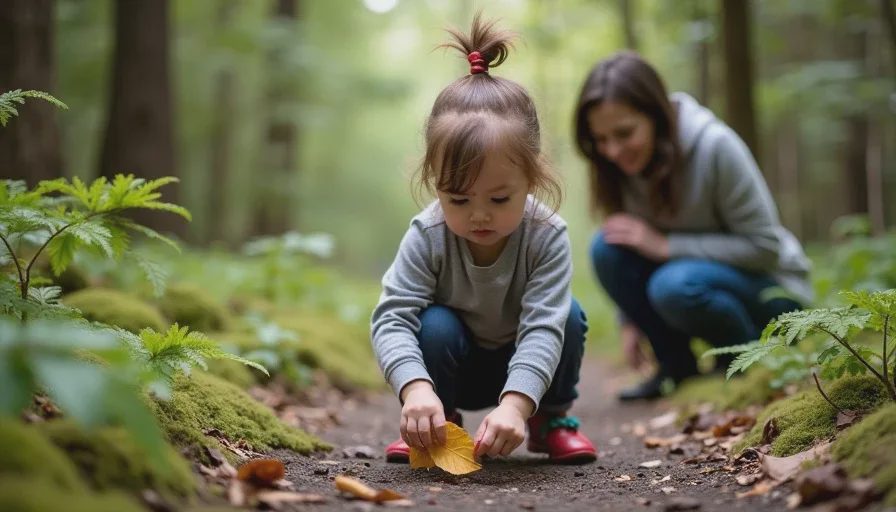
I'm going to share the trails we've hiked with Mae over the past year. These are all within about 45 minutes of Seattle, and I've noted what worked and what didn't. Finding the right trail is part of making outdoor toddler activities at home feel doable rather than daunting.
Trail | Distance | Difficulty | Stroller-Friendly? | What Worked |
|---|---|---|---|---|
Discovery Park Loop Trail | 2.8 mi loop | Easy | Mostly — some gravel sections | Flat, lots of stopping spots, beach access halfway |
Seward Park Loop | 2.4 mi loop | Easy | Yes, paved | Lake views, bathrooms, Mae walked the whole flat stretch |
Cougar Mountain - Coal Creek Falls | ~1.5 mi | Moderate | No | Too rocky for stroller, but carrier worked well |
Washington Park Arboretum | 1-2 mi varies | Easy | Yes, paved paths | Ollie loved the plants, Mae napped in the carrier |
Carkeek Park - Piper's Creek | ~1 mi | Easy | Partial | Beach at the end was the highlight for both kids |
Lincoln Park | 1.5 mi | Easy | Yes, paved | Flat, beach access, playground at the south end |
What Makes a Trail Work With a Toddler
After a lot of trial and error, here's what I look for:
A loop, not an out-and-back (so there's no "turn around" tantrum)
Bathroom access within the first mile
Something interesting at the halfway point — water, a view, a beach
Flat enough that a 2-year-old can walk sections safely
Under 3 miles total
What Goes in the Pack
Mike carries the big backpack, and I carry Mae in the structured carrier. Here's what we bring — and what we've learned to leave behind:
More snacks than you think you need. I'm talking pouches, crackers, cheese sticks, fruit. When Mae hits the wall on the trail, 9 times out of 10 it's hunger, not tiredness.
One extra layer per person. Pacific Northwest weather changes fast, and a cold, wet toddler is a done hike.
A small first-aid kit. We've used band-aids more times than I want to admit.
Water for everyone, including a sippy cup for Mae.
One small "surprise" for Mae — a new-to-her snack or a little toy she hasn't seen in a while. It's the trick I use when she hits the wall and the carrier isn't enough.
Carrier vs. Walking: Letting It Be Both
One of the things I worried about with Mae was whether she'd ever walk on trails if we always put her in the carrier. Here's what I've figured out: she walks when she wants to walk, and she rides when she's tired. I don't force the walking, and I don't force the riding. When she wants down, I let her down. When she lifts her arms up, she goes in the carrier.
Ollie went through the same phase at 2, and by 4 he was hiking a mile on his own. By 6, he's keeping up with us on moderate trails. The progression happened naturally because we kept bringing him and letting him do what he could.
I see parents on the trail pushing their toddler to walk just a little further, and I understand it — you want them to build stamina. But a 2-year-old who's crying on a trail isn't building anything except a negative association with hiking. Let them ride. Let them walk. Let them sit on a log and examine a bug for ten minutes. The trail isn't going anywhere.
Why We Keep Going Back
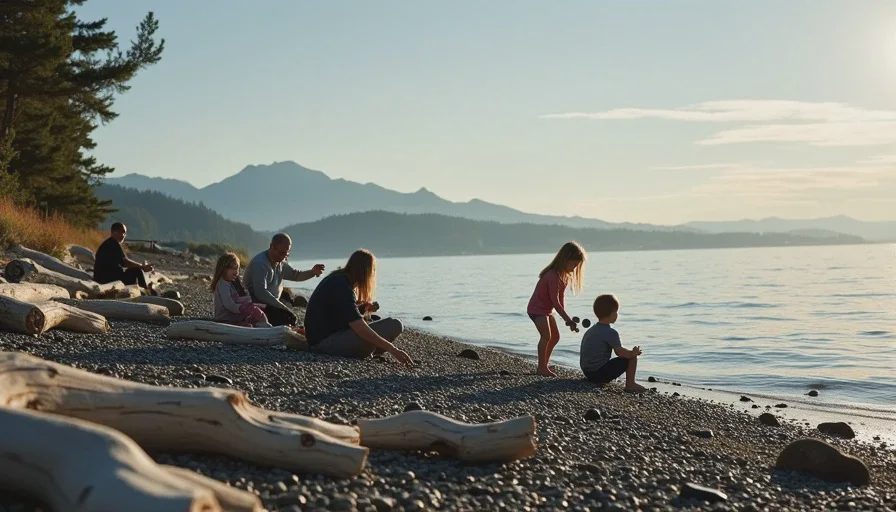
When friends ask me if hiking with a toddler is worth the effort — the packing, the carrier, the shorter distances — I always say yes, but not because of the exercise. It's because of the hour where Mae stood at the edge of Puget Sound and threw rocks in the water for 20 minutes while Ollie ran ahead on the trail. That's not a hike in the way Mike and I used to think about hiking. But it's something, and it matters.
Mike put it well one Saturday evening, after a particularly slow walk through Discovery Park where we covered maybe a mile in two hours. He said, "We didn't really hike today." And I said, "No, we parented outdoors." That's the reframe. It's not about the hike. It's about being outside, together, in a place that isn't our living room.
It's a season, not a race. Mae won't always need the carrier. Ollie won't always need to stop every five minutes. Right now, our hikes are slow, short, and snack-heavy. That's fine. We're outside, we're together, and that's enough.


Travellers Write
No letters yet — be the first traveller to write.