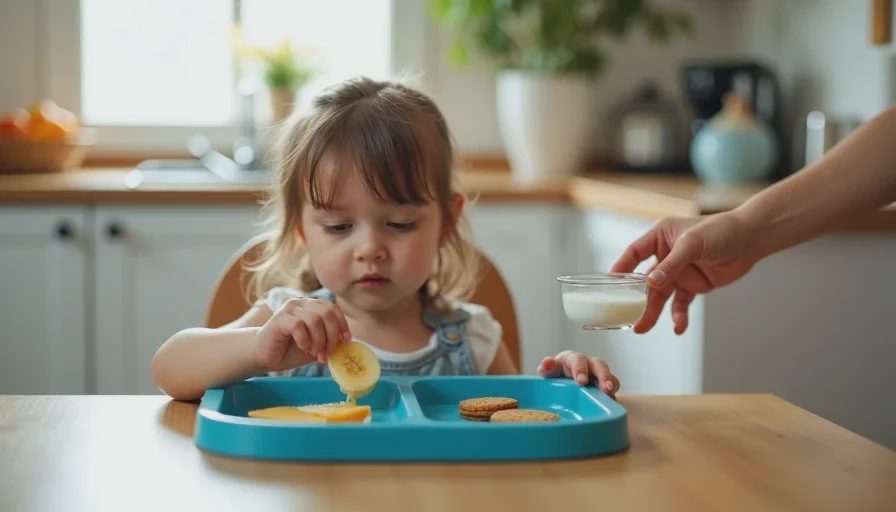
When parents at my workshops ask for toddler meal ideas, they usually want recipes. What I hand them instead is a photocopy of a week from my field notebook — because the problem is almost never the food. It is the expectation that a toddler will eat three balanced meals a day, every day, the way an adult does. They do not. They eat like someone who is growing in spurts and has strong opinions about texture on Tuesdays. Once I started logging Mae's intake the way I used to log my classroom kids — over a full week, not meal by meal — the panic disappeared. Good toddler meal ideas are not about fancy recipes. They are about consistency and trusting the weekly average.
What a Real Week Looks Like
Here is the conclusion I want you to walk away with: a toddler who eats nothing at dinner on Tuesday but demolishes a plate of scrambled eggs at breakfast on Wednesday is eating fine. The daily picture looks chaotic. The weekly picture looks balanced. I learned this in my classroom years and I relearned it with Mae. Individual meals matter very little. The week is the unit of measurement.
The Field Notebook Method
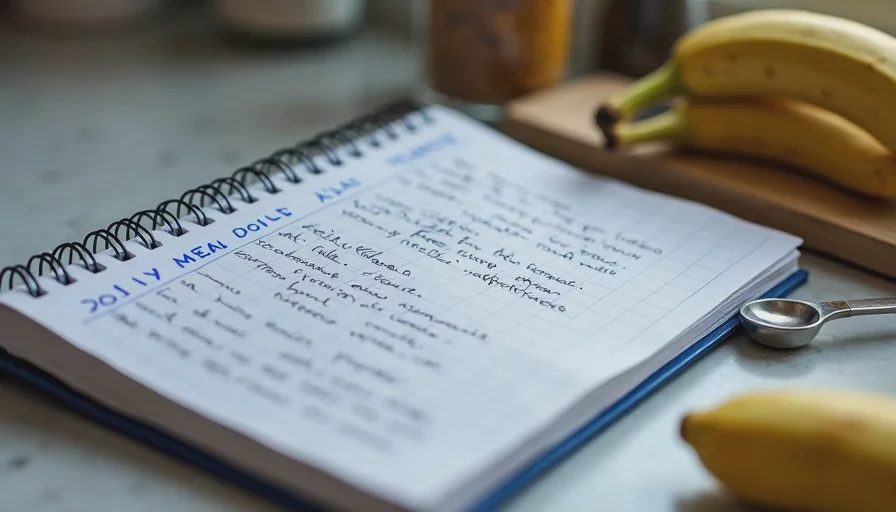
I keep a spiral notebook on the kitchen counter — the same observation-sheet shorthand I used for my preschool kids. For Mae, I log what was offered, what she actually ate, and a one-word mood note. It takes about 30 seconds per meal. At the end of the week, I can look back and see the pattern: she ate plenty. It was just distributed unevenly across the week, not packed into each meal.
The notebook also catches things my anxious brain would otherwise forget. I remember the Tuesday she ate one bite of dinner and felt like a failure. I do not remember that on Wednesday she ate a full plate of pasta and a banana. The notebook remembers both, and the average is what matters.
The Dinner Strike Is Not About the Food
Dinner is the most overestimated meal of the toddler day. By 5:30 p.m., most two-year-olds are tired, wound up from the day, and not interested in sitting still for a plate of something new. This is not a picky eating problem. It is a circadian rhythm problem. When I share toddler meal ideas in workshops, I always tell parents this first: stop evaluating dinner as the test of whether your child is eating well.
Why Evenings Are the Hardest Eating Window
Think about it from their perspective. A toddler has been awake since 6:30 a.m. They have been moving, learning, climbing, and absorbing input for eleven hours. Their blood sugar is dipping, but so is their patience. Asking them to sit at a table and eat a food they have never seen before at 5:30 p.m. is asking a lot.
Here is what I do on the hard evenings:
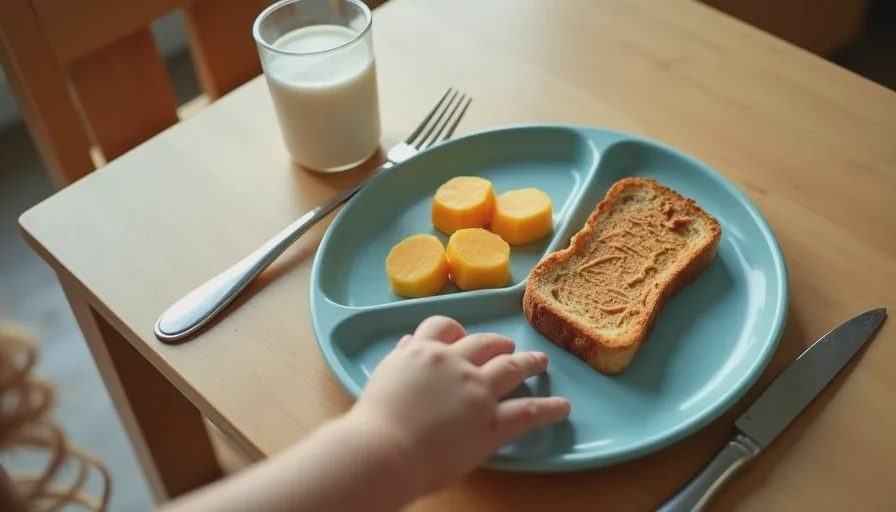
Offer something familiar and low-stakes — toast with peanut butter, cheese and fruit, a muffin I baked over the weekend
Sit with her even if I am not eating — my presence matters more than the food
Do not negotiate, bribe, or count bites — this turns dinner into a power struggle, and power struggles with a two-year-old are unwinnable
Accept the light evening and trust that breakfast will be better
A Week of Mae's Actual Food Intake
This is a real week from my notebook when Mae was 26 months old. I am not cherry-picking a good week or a bad one. This is just what happened.
Day | Breakfast | Lunch | Snacks | Dinner | Overall |
|---|---|---|---|---|---|
Monday | Oatmeal, banana, milk | Mac and cheese, peas (ate all) | Crackers, cheese | 2 bites chicken, refused rest | Light dinner, solid day |
Tuesday | Yogurt, toast with butter | PB and J, carrot sticks | Apple slices | Nothing — cried at the plate | Low day, normal |
Wednesday | Scrambled eggs (2), toast, milk | Pasta with meatballs (full plate) | Graham cracker, milk | Rice, beans, half avocado | Strong day — made up for Tuesday |
Thursday | Banana muffin, milk | Quesadilla, black beans | Yogurt, berries | 3 bites salmon, broccoli | Decent, not great |
Friday | Pancakes, syrup, milk | Soup and bread (ate bread only) | Cheese stick, grapes | Full plate of chicken and rice | Strong dinner, surprising |
Saturday | Waffles, berries, milk | Snack plate (cheese, crackers, fruit) | Smoothie | Refused dinner, ate a banana later | Odd day, still fine |
Sunday | Eggs and toast (big breakfast) | Leftover pasta, cucumber | Applesauce, crackers | Pizza (ate 1.5 slices) | Solid weekend finish |
Look at Tuesday. A parent who only saw that meal would panic. Look at Wednesday. She ate everything. Across the week, she hit every food group, ate enough calories, and had exactly one truly low day. That is what a normal toddler week looks like. If you want practical toddler meal ideas, this table is a more useful reference than any recipe list — because it shows you what real eating patterns look like, not a fantasy plate.
What I Stopped Worrying About
Once I started tracking the week instead of the meal, several anxieties dropped away:
Whether she ate enough at dinner — it almost always balances out by the next morning
Whether she got enough vegetables on a given day — over the week, it evens out
Whether she was "behind" on trying new foods — she tries new things when she is ready, not when I schedule it
Whether I was offering enough variety — the notebook showed me I was offering plenty; she just was not always taking it
If you are looking for toddler breakfast ideas specifically, the table above is a good place to start. Eggs and toast, oatmeal with banana, yogurt with fruit, a weekend muffin — these are not complicated meals. They are the same five or six things rotated through the week, and that is enough. Variety at breakfast matters less than consistency and showing up.
The Only Rules I Follow
I keep it simple. I offer a protein, a fat, and a fruit or vegetable at every meal. I do not short-order cook — what is on the table is what is available, though I always include at least one thing I know she will eat. I do not reward eating with dessert — dessert is not a thing in our house right now. And I log it all, because the notebook is the thing that keeps me honest and calm.
Mae is two. Some weeks she eats like a teenager. Some weeks she lives on air and cheese sticks. Both are normal. It's a season, not a race. The job is not to get her to eat a balanced meal every time she sits down. The job is to keep showing up with real food, logging what happens, and trusting that the week will look better than any single meal makes you feel.

Travellers Write
No letters yet — be the first traveller to write.