Children's fruit kebabs can turn an ordinary snack plate into something that feels like a tiny celebration. For toddlers, the appeal is not really culinary sophistication. It is the bright colors, the chance to choose pieces, and the novelty of eating food arranged in a new way. For parents, the best version is quick, soft enough to chew, and realistic to prepare between shoes, laundry, and somebody asking for the blue cup.
I spent eight years watching toddlers eat in a preschool classroom, and I have learned plenty more while feeding my own two-year-old, Mae. The main lesson is simple: presentation helps, but pressure does not. These children's fruit kebabs are an invitation to explore, not a test of whether your child will eat every piece.
Why this snack works for toddlers
Children's fruit kebabs offer a useful mix of color, texture, and independence. A toddler might ignore sliced strawberries in a bowl but reach for the same strawberries when they are arranged beside banana, melon, and a few blueberries. That little bit of control matters. Young children often eat more calmly when they can decide what to pick up and in what order.
Fruit also gives you plenty of natural variety. Strawberries are soft and familiar, bananas are creamy, and ripe melon is easy to bite. Peaches, pears, kiwi, and mango add different flavors without requiring a complicated recipe. You can serve the fruit alone or pair it with plain yogurt for dipping, a small piece of cheese, or a mini whole-grain muffin for a more filling snack.
For a playdate, children's fruit kebabs look festive on a platter. For an ordinary Tuesday, they can be made with whatever is already in the refrigerator. There is no need to buy specialty fruit or make every skewer identical.
Make children's fruit kebabs toddler-safe
The word kebab can make parents picture sharp wooden skewers, but those are not a good choice for a toddler. An adult should handle the assembly, and the safest approach for young children is to remove the fruit from any stick before serving. You can arrange the pieces on a plate in a row, use short, blunt reusable picks only with close adult supervision, or let an older child assemble a kebab while a toddler eats the fruit from a bowl.
Cut fruit into small, manageable pieces based on your child's chewing skills. Quarter grapes lengthwise; never serve whole grapes to a young child. Cut blueberries, cherries, and round pieces of melon so they are not firm, slippery spheres. Remove pits, seeds, tough peels, and stems. Strawberries can be sliced or quartered, while banana coins are best cut into halves or smaller pieces if they are large.
Your child should sit upright while eating, and an adult should stay nearby rather than preparing food and walking away. Even soft fruit can be a choking hazard when it is round, firm, sticky, or served in a large chunk. If you are unsure how to prepare a particular food, ask your pediatrician or consult current choking-prevention guidance.
Easy combinations to try
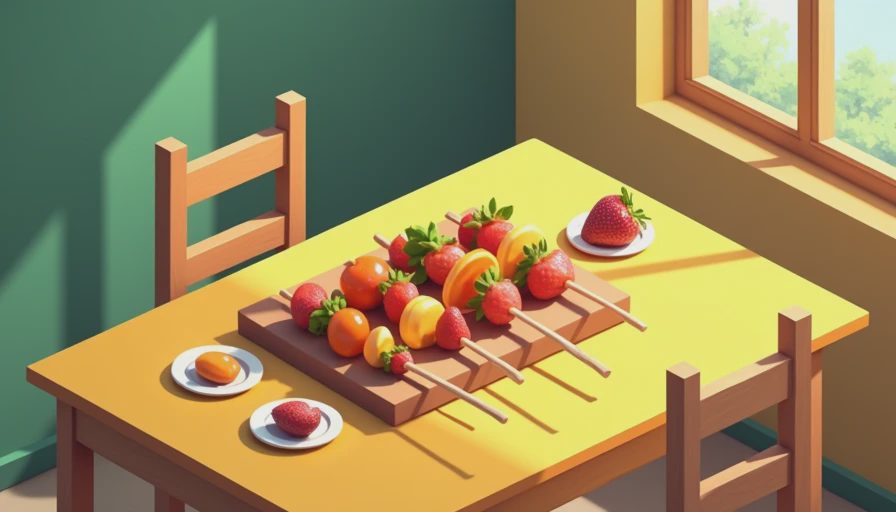
A simple color pattern is often enough to make children's fruit kebabs exciting. Try strawberry, banana, blueberry, and melon. For a sunny yellow combination, use banana, mango, pineapple, and ripe pear. If your child likes crisp flavors, pair peeled apple pieces with strawberries and grapes that have been quartered lengthwise. Keep apple pieces thin or cook them briefly until softer for a younger toddler who is still learning to manage firmer foods.
You can also build combinations around one fruit your child already accepts. If banana is reliable, place banana beside a small amount of kiwi or peach instead of presenting a plate full of unfamiliar choices. If your toddler loves berries, add melon or pear in just two or three pieces. Familiar food acts as a comfortable starting point while the new food remains low-pressure.
Children's fruit kebabs do not need sugar, honey, chocolate, or juice to taste good. Ripe fruit brings plenty of sweetness. For children under one, avoid honey altogether; for toddlers, the bigger goal is keeping snacks balanced and not turning every serving into dessert.
How to serve them without a mealtime battle
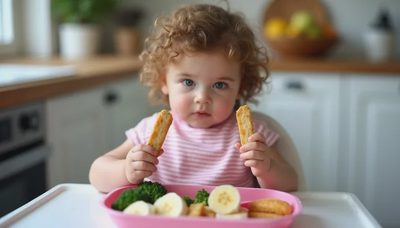
Offer a modest portion first, perhaps four to six small pieces, and add more if your child is still hungry. A huge platter can look overwhelming, especially for a tired toddler. Place the fruit on a divided plate or a small tray and let your child choose where to begin.
A dip can make the experience more engaging. Plain whole-milk yogurt, unsweetened applesauce, or a thin spread of sunflower seed butter can work, provided your child has already been safely introduced to the ingredients and allergies are considered. Keep dips in a shallow container so they are easier to reach without tipping.
Avoid turning children's fruit kebabs into a negotiation. You can say, “The strawberry and melon are here,” then let your child decide. If the fruit is ignored, calmly move on. Some toddlers need to see a food many times before tasting it, and a refused snack is not a parenting failure or proof that your child will never eat fruit.
Prep children's fruit kebabs ahead of time
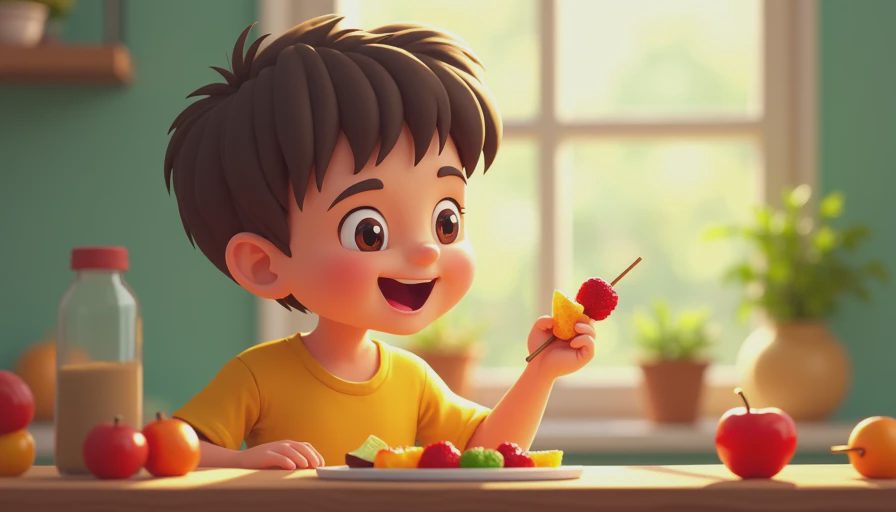
For a low-stress morning, wash and dry the fruit the night before. Cut sturdy choices such as melon and strawberries, then store them in separate covered containers in the refrigerator. Keep bananas and apples for closer to serving time because they brown and soften quickly. A little lemon juice can slow browning on apples, but it is not necessary if you serve them soon.
If you are packing the snack for preschool or a park, use an insulated lunch bag with a cold pack. Follow the school’s rules about whole fruit, nuts, dairy, and shared food. Pack the pieces in a leak-resistant container rather than sending a sharp skewer. For a picnic, bring a small cutting board and prepare the fruit at the destination, keeping it cool until snack time.
You can make the snack more filling by serving fruit beside toast, oatmeal, cheese, beans, or yogurt. Fruit is nutritious, but some toddlers need protein or fat to stay satisfied through the next activity. A balanced plate is especially helpful when your child has entered the phase of eating three bites and announcing that lunch is over.
A simple plan for picky eaters
Start with two accepted fruits and one less familiar option. Keep the portions small, describe the food without selling it, and let your child touch or smell it without requiring a bite. “This is soft mango” is more useful than “You will love it.” If the new fruit lands on the floor, you have still offered a calm opportunity to learn.
Children's fruit kebabs can also invite useful language. Talk about colors, shapes, textures, and counting: “You have two red pieces,” or “The melon feels juicy.” Toddlers may be more interested in making a pattern than eating at first, and that is perfectly fine. Food exploration is still learning.
At our house, Mae sometimes eats only the banana and carries the empty pick around like a tiny flag. I do not rebuild the plate or start bargaining. I simply offer fruit again another day. It's a season, not a race, and one snack never tells the whole story.
The easy takeaway
Children's fruit kebabs are most successful when they are colorful, flexible, and safe rather than elaborate. Choose ripe fruit, cut round foods carefully, remove sticks before a toddler eats, and serve a small portion alongside something filling when needed. Let your child participate without making the snack a performance.
On busy days, put the same prepared fruit in a bowl and call it done. The magic is not the skewer. It is giving a young child a manageable choice and a pleasant reason to come to the table.

Travellers Write
No letters yet — be the first traveller to write.