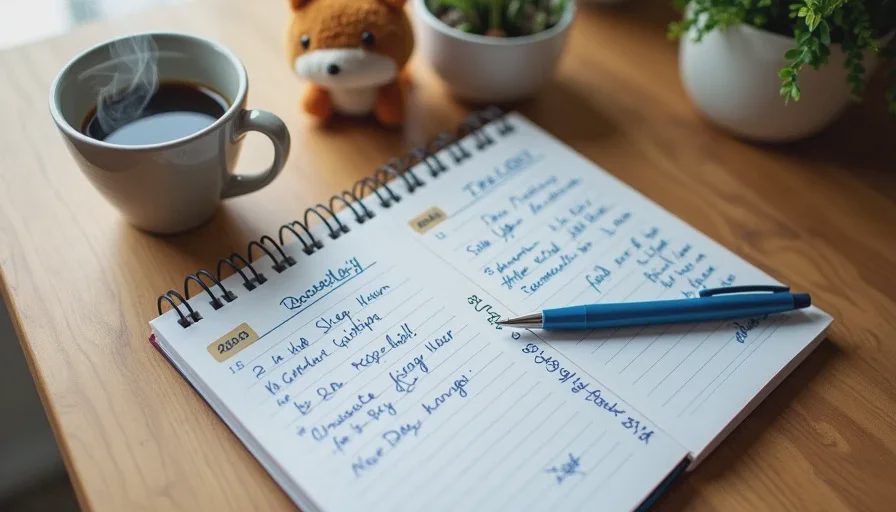
In the junk drawer of our Seattle kitchen — between the twist ties and the mystery keys — there's a spiral notebook with a bent corner and coffee stains on the cover. Mike calls it "the logbook." I call it my toddler field notebook. Every night, after the kids are down, I spend about four minutes writing three or four lines about Mae's day: what she ate, how she slept, what she did, and any little thing that felt worth remembering. It's the same observation-sheet shorthand I used for eight years as a preschool teacher, and it has done more to keep me calm about toddler developmental milestones than any article or app I've ever read.
Where the Notebook Came From
When I taught at a Seattle-area early learning center, I kept an observation sheet for every child in my room. A few short lines a day: what they ate at lunch, how they napped, a new word, a new skill, a meltdown and what triggered it. At the end of the month I'd read back through the pages and the patterns would jump out — this kid naps better on days we go outside before lunch; that kid talks more since her big brother started reading to her.
When Mae was born, I missed that habit. Everything was changing so fast and I was so tired that I felt like I was losing track of her actual days. So about a month in, I grabbed a spiral notebook from the junk drawer and started the same habit at home. It was never meant to be a baby book. It was meant to be a field notebook — a place to write down what was actually happening so I could see it clearly later.
The Shorthand I Use
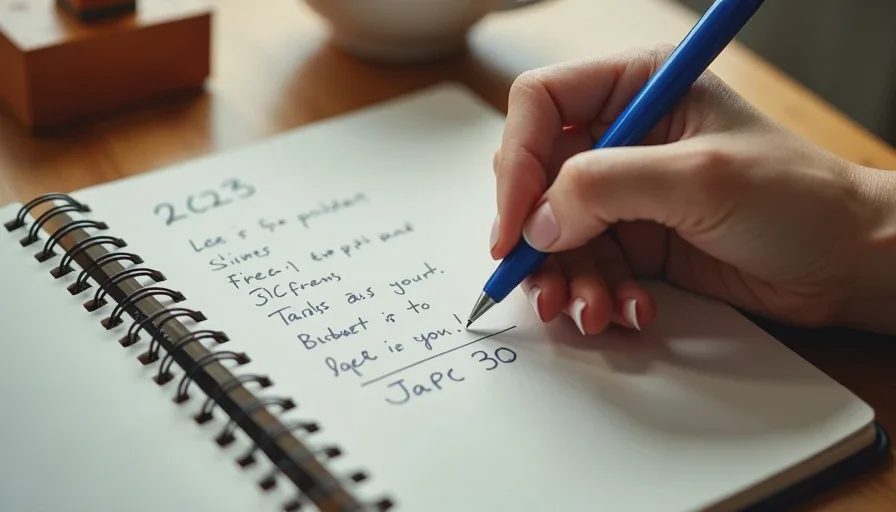
My shorthand looks like gibberish to anyone else, and that's the point. It takes four minutes because it doesn't need to be neat or shareable. An entry from a random Tuesday this month:
Time | Note |
|---|---|
7:10 a.m. | Up 6:50, happy, "fox book" = first words of day |
11:45 a.m. | Lunch: 3 bites chicken, all rice, grapes whole — refused pieces |
1:30 p.m. | Nap 45 min, cried at drop, back down 10 min, slept |
4:20 p.m. | Melty moment after Ollie took the blue crayon, settled 3 min |
8:00 p.m. | Bed 7:50, asleep 8:05, "one more song" x2 |
Five lines. Ninety seconds. That's the whole system.
What I Actually Track
I keep it to three things, because I've learned that the notebook only works if it stays easy. The day I make it complicated is the day I stop doing it.
Sleep
Not hours — patterns. Did Mae fall asleep easily or fight it? Did she wake overnight? How long was the nap? Over a month, those lines tell you things you'd never catch day to day: that the rough nights cluster after big park days, or that her sleep dips right before a language jump. When I see a streak of bad nights, I can look back and find the common thread — the way I used to look back at a classroom observation sheet before deciding whether a child's tough week was a phase or a pattern.
Food
I write down what was offered and roughly what came back. Not calories, not grams — just the shape of it. This is where my toddler field notebook has saved my sanity more than once. A week of "refused everything except crackers" looks terrifying in the moment. Read back over the whole month, it's usually a Tuesday-and-Wednesday dip that recovered on its own. Food, more than anything, is where bad days masquerade as trends.
Behavior and Milestones
Here's where the toddler developmental milestones actually live. New words. A first jump. The first time she stacked four blocks. A tantrum and what set it off. The day she said "no" to everything and the day she hugged her brother voluntarily. These are the notes I read back on the hardest mornings, because they remind me how much ground she's covered in a year. That's the quiet work of a field notebook: it records toddler developmental milestones as they happen, before the days blur together into one long season.

Why Writing It Down Changes Everything
Here's the part I can't overstate: the notebook separates bad days from real trends. A bad day is loud and memorable. A trend is quiet and only shows up on paper.
I remember one stretch when I was convinced Mae wasn't talking much. Every day felt like she was behind. Then I flipped back through three weeks of entries and found a word I'd written down nearly every day — a new one each time, sometimes two. She was adding words steadily. I just couldn't see it from inside the days. That's the whole reason the notebook exists: memory is terrible at averages, and a toddler's growth only makes sense in averages. In my experience, parents who write things down panic less about toddler developmental milestones — because the paper remembers the progress your exhausted brain forgets.
A few things writing it down has genuinely helped me with:
Spotting food aversions before they became battles (the texture refusal that showed up three days running)
Noticing that Mae's worst mornings followed late bedtimes, which changed how we scheduled evenings
Catching that a "new skill" like climbing onto the couch wasn't a one-off — it was a leap, and everything else shifted for a few days
Keeping a calm record to bring to her pediatrician when I did have a real question, instead of vague "she's been weird lately"
Catching Things Early
One of the reasons I started this as a teacher was early intervention. When a classroom child was heading toward a speech referral or a feeding evaluation, it was almost always the observation notes — not the weekly memory — that showed the pattern clearly enough to act on. The same logic applies at home. If something in your gut says a milestone isn't coming, a month of notebook pages gives you and your pediatrician something concrete to look at together. It turns "I'm worried" into "here's what I've been seeing." A notebook can't diagnose anything, but it can hand your pediatrician a month of real toddler developmental milestones instead of a vague hunch.
How to Start Your Own Field Notebook
You don't need my shorthand or my categories. Here's the beginner's version, and it's about as simple as it gets:
Buy any notebook — a 99-cent spiral is fine. Keep a pen attached to it or next to it, wherever you'll see it.
Pick one time of day to write — I do it after bedtime, but right after nap works too.
Write three lines: sleep, food, anything new. That's it. Skip days when you need to; the notebook forgives.
Don't grade anything. This is an observation log, not a report card.
Read back through it once a month. That's where the payoff is.
The kids don't need you to be a record keeper. But I promise, the person you are in November will thank the person who wrote things down in August. When you're standing in a pediatrician's office or lying awake at 2 a.m. wondering, the notebook is the calmest voice in the room.
I started mine because I was a teacher who couldn't turn off the habit. I kept it because it made me a calmer mom. Every time Mae surprises me with a new word or a new trick, I write it down, and every time I read the pages back, I remember that toddler developmental milestones aren't a race — they're a series of small, forgettable Tuesdays that add up to something extraordinary. It's a season, not a race. The notebook is just the proof.



Travellers Write
No letters yet — be the first traveller to write.